
Start with the decisions the project must support.
A useful office design brief explains who will use the space, what needs to improve, what is known about the existing building and which services the organisation wants to commission. It gives leadership, facilities and procurement teams a common starting point.
For a bank, multinational or business with several locations, separate the shared requirements from the conditions at each site. A consistent brief makes proposals easier to compare; it does not remove the need for site investigation or a clearly agreed appointment.
1. Describe the working day.
List the teams, activities and expected occupancy. Include meeting patterns, visitor arrival, focused work, staff learning, storage and any difficulties the current space creates. Ask everyday users for concrete examples, then have the organisation agree its priorities.
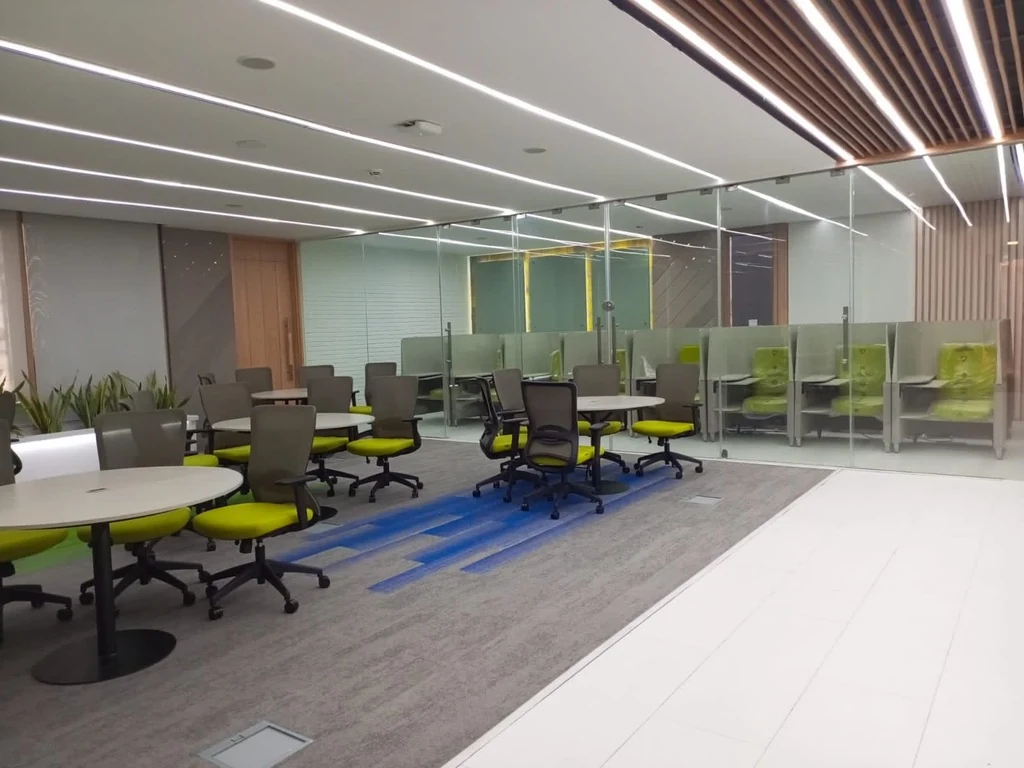
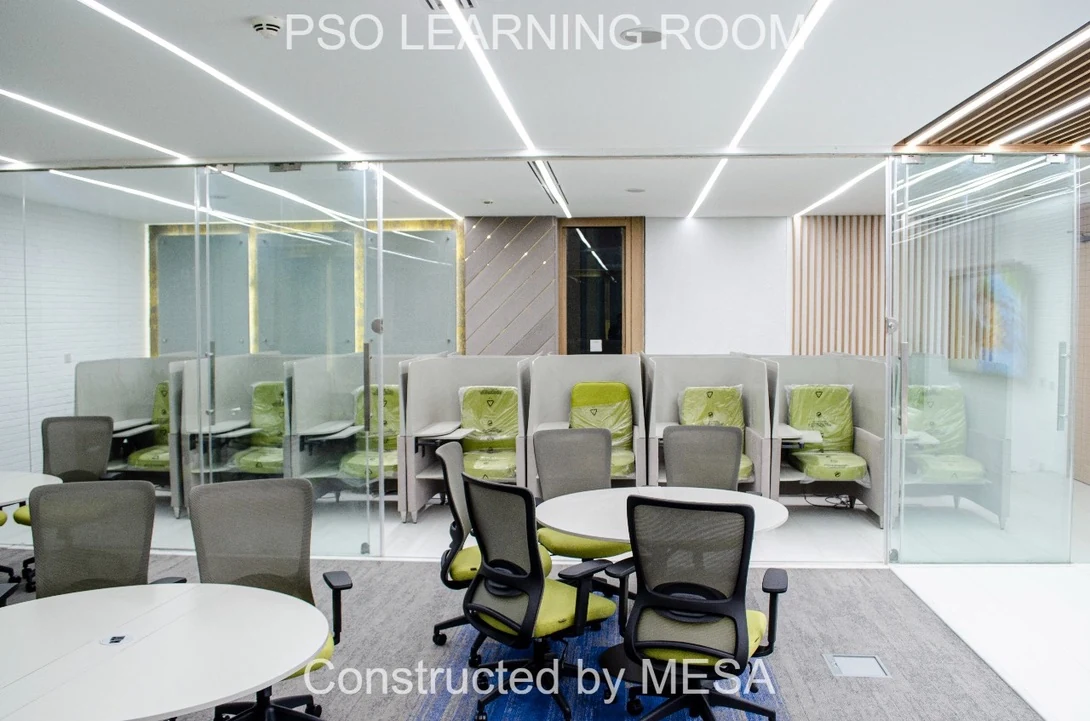
At PSO Learning Room, shared tables, individual pods and a presentation setting make different activities visible within one project. The lesson for another brief is to name the activities before prescribing the furniture.
2. Give the design team a reliable starting point.
Provide the address, approximate floor area, available plans, photographs, current use and known building constraints. Identify the information that still needs a survey. Record landlord requirements and the client’s security, IT and operational contacts.
For an occupied refurbishment, state when access is possible, which activities must continue and whether temporary accommodation can be considered. The team needs to assess phasing; a brief alone cannot guarantee uninterrupted operation.
3. Separate the services you are buying.
Architecture and interior design, specialist engineering, tender documentation, construction supervision, project management and construction are different responsibilities. Define the outputs and review stages required for each.
If turnkey delivery is being considered, ask how the proposal allocates design, supply, construction, approvals, inspection and handover. Agree inclusions and exclusions in writing. An appealing finished image is not a complete scope.
4. Make proposals comparable.
Give bidders the same base information, submission date and route for questions. Ask for the proposed approach, deliverables, team responsibilities, relevant project evidence, programme assumptions, fees and exclusions.
Review evidence in its context: distinguish completed work, ongoing sites and design proposals. Compare the scope and delivery assumptions alongside the price. Your organisation’s procurement team should apply its own required selection and approval process.
5. Record who decides, and when.
Identify the owner of the brief, the people who review layouts and services, and the authority for final approval. Set review points before later work depends on an earlier decision. Record changes, their implications and the approved response.
For a multi-site programme, agree how a pilot will be reviewed and which lessons can become shared requirements. A local constraint should remain visible rather than being hidden inside a generic standard.
A starting brief to share with your team.
Copy these headings into your internal brief and add the information you know.
- Organisation and project contact
- City, site count and approximate area
- Current condition and available drawings
- People, activities and problems to solve
- Essential priorities and optional improvements
- Desired design and delivery services
- Budget framework, target dates and access constraints
- Appointed consultants and specialist contacts
- Review authority and procurement route
- Required proposal outputs and submission deadline
Keep restricted drawings and security-sensitive material within your organisation’s approved sharing process. An initial enquiry can describe the project without attaching those records.
Bring the brief into a conversation.
MESA’s workplace, learning-space and institutional projects provide a starting point for discussing your requirements. Explore corporate workplace programmes, banking-space briefs or procurement enquiries.
Start a conversation with MESA. The enquiry tool prepares an email draft; your email application completes sending.